Add
Room 7-101, Fangjing Zisha Cultural Tourism City, West Changan Road, Dingshu Town, Yixing City, Jiangsu Province
service@teateatok.com
Room 7-101, Fangjing Zisha Cultural Tourism City, West Changan Road, Dingshu Town, Yixing City, Jiangsu Province
service@teateatok.com
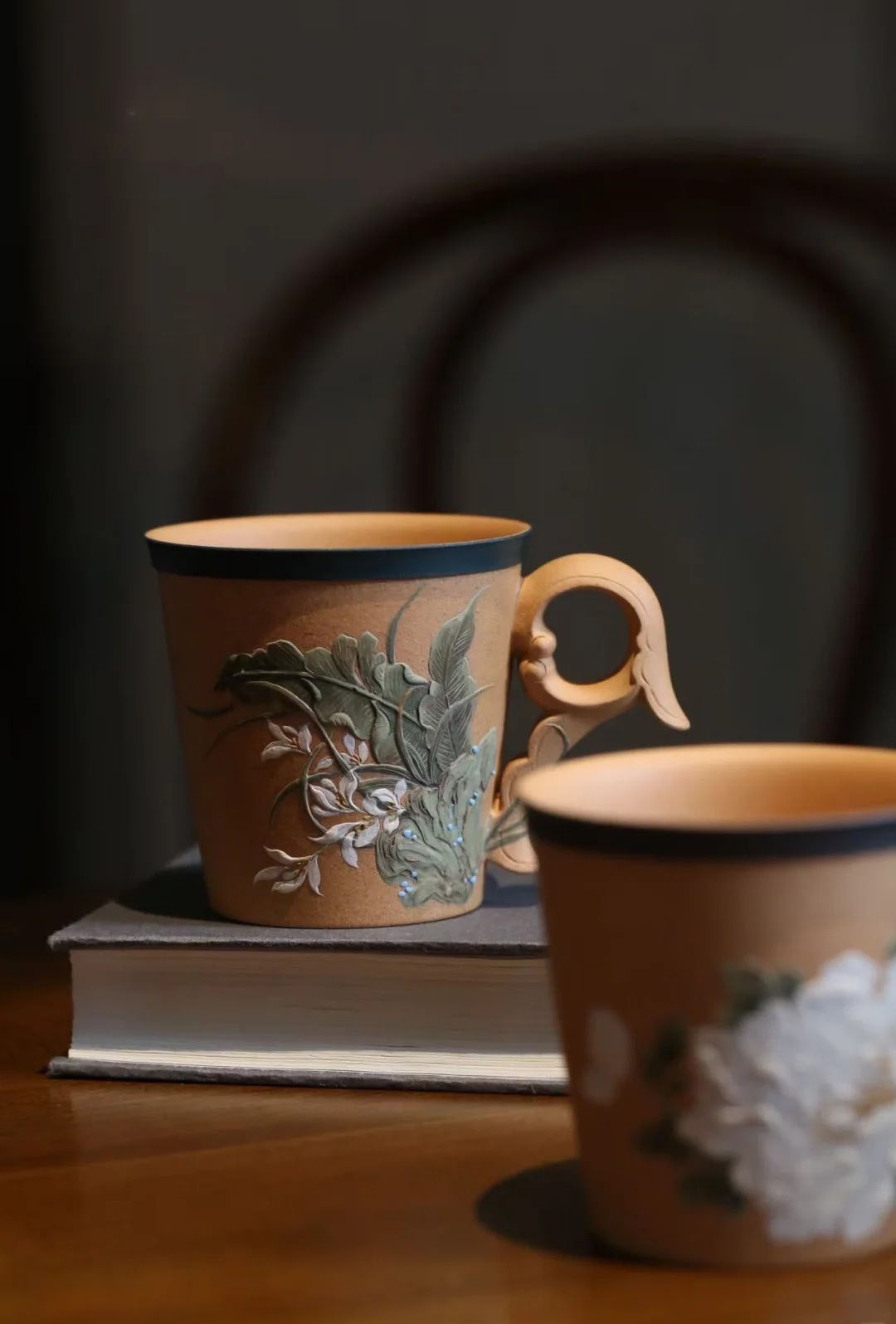
Slip‑painting decoration is a common decorative craft for Yixing zisha pottery, known as a “clay‑on‑clay” technique. Artisans dip brushes in zisha clay slip and paint decorative patterns on damp unfired teapot bodies. The painted layers have a certain thickness. After firing, the finished ware shows visual effects of shallow relief or thin relief carving. This craft evolved from the ancient lacquerware stacking and carving technique.
In terms of clay color, slip‑painting is divided into same‑color slip‑painting and contrasting‑color slip‑painting. Decorative methods include flat slip painting, piled slip painting, combined flat‑piled technique, spray‑slip technique and press‑inlay technique. Flat slip painting focuses on delicate details, while piled slip painting emphasizes three‑dimensional texture and depth. To create slip‑painted works, craftsmen need solid painting and calligraphy skills, good knowledge of clay properties and firing, and precise control over shrinkage and moisture balance between the clay body and decorative slip. Traditional slip‑painting themes cover landscapes, flowers and birds, figures, poems and calligraphy, mostly adopting the composition style of traditional Chinese painting.
Slip‑painting originated in the late Ming and early Qing dynasties. It flourished during the Yongzheng and Qianlong reigns of the Qing Dynasty, then gradually declined from the late Qianlong period to the early Republic of China. Historical artisans such as Lüqian Yang, Jichu Yang, Hanwen Chen and Chunlai Shao won wide acclaim for their slip‑painted pieces, featuring skilled brushwork, well‑matched clay slip colors, distinct layers and profound artistic conception. Famous surviving masterpieces include Chen Mingyuan’s plum trunk teapot and Jichu Yang’s zisha brush pot with slip‑painted landscape.
This craft has strict requirements on the moisture of unfired clay bodies. If the humidity of the base body and decorative slip does not match, adhesion will weaken and patterns may peel off, so only a small number of fine antique slip‑painted pieces have survived.
Slip‑painting is mainly used to decorate zisha teapots, creating a unique artistic effect called “ink wash within clay”. It is also applied to zisha brush pots, flower pots and other zisha wares. Besides ancient heirloom treasures, representative modern works include Ode to the Yellow River by Zhiqing Zhang, and slip‑painted flower‑and‑bird teapots by Ye Zhang, Chang Shi and Jiejie Lu.
Slip‑painting integrates traditional Chinese painting with ceramic craftsmanship, infusing the freehand spirit of literati painting into zisha vessels and endowing pottery with distinctive artistic value. Taking the pine and crane motif as an example, the complete workflow is as follows: sketch outlines on raw clay slab with pencil, apply white slip base coat, pile thick clay slip for rocks and tree trunks, add color rendering, paint crane feathers with fine single strokes, extrude slip for pine needles, trace outlines, add signatures and fire in the kiln. The clay body and colored slip are normally fired at high temperatures between 1120℃ and 1180℃, and high heat will change the final color presentation of clay materials.