Add
Room 7-101, Fangjing Zisha Cultural Tourism City, West Changan Road, Dingshu Town, Yixing City, Jiangsu Province
service@teateatok.com
Room 7-101, Fangjing Zisha Cultural Tourism City, West Changan Road, Dingshu Town, Yixing City, Jiangsu Province
service@teateatok.com
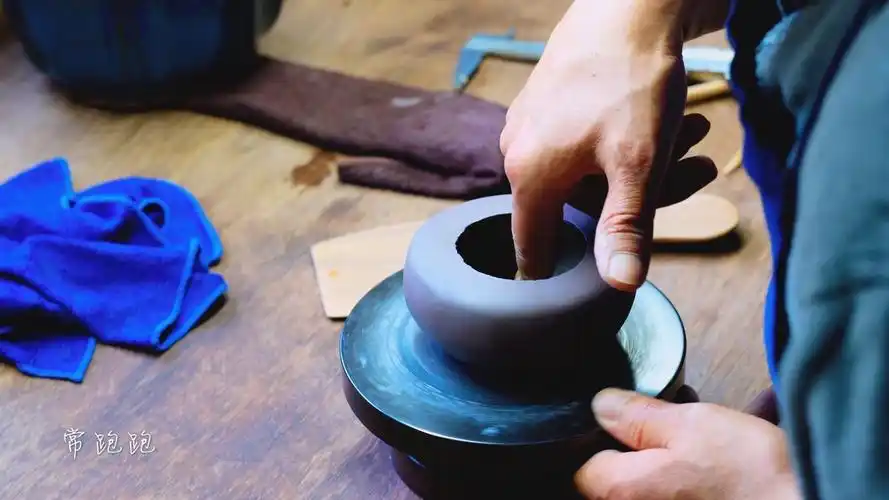
The raw materials of Yixing Zisha pottery fall into three main categories: purple clay, green clay and red clay, collectively known as Zisha clay.
Purple clay seams are embedded within kaolin deposits and distributed as interbedded layers. The ore bodies are mostly thin and lenticular, generally ranging from tens of centimetres to one metre in thickness, with low seam stability. The raw ore appears purple or purplish-red with pale green speckles. After firing, it turns purple, brownish-purple or dark violet.
The primary mineral component of purple clay is hydromica, along with variable proportions of kaolin, quartz, mica fragments and iron oxide. Comprehensive chemical analysis shows that purple clay belongs to granular clay-quartz-mica ore, with properties very similar to porcelain-making raw materials. Therefore, pure purple clay boasts excellent plasticity, high blank strength and low drying shrinkage rate, offering an outstanding craft foundation for designing diverse vessel shapes.
Green clay forms between purple clay seams. It is rich, smooth and fine in texture, earning the name “clay within clay”. Tuanshan clay is a natural blend of purple clay and green clay. Green clay ore is scarce and delicate, with a lower refractoriness than purple clay. It is mostly used as decorative slip or surface coating on clay blanks to bring rich colour variations to Yixing Zisha wares.
Red clay, also called Zhuni clay, is found at the bottom of tender clay deposits. Its ore bodies are scattered and fragmented, requiring manual sorting. Zhou Gaoqi of the Ming Dynasty recorded: “Yellow stone clay from Zhaozhuang Mountain is unweathered rock core ore, firing into cinnabar red.”
Depending on its iron oxide content, red clay can develop a range of hues after firing, including cinnabar red, cinnabar purple and begonia red.
In early times, Zhuni clay was scarce. It was mainly used for small flat teapots exported to Southeast Asia, and more often applied only as decorative slip on purple clay blank surfaces.
Refined Zhuni clay used by modern master potters is processed from raw red ore through repeated washing and sedimentation, milled to around 140–180 mesh. The complex refining process produces finished Zhuni teapots with fine, compact and creamy smooth clay bodies.
The most distinctive mineral feature of Zhuni clay is its extremely high iron oxide content, roughly 14%–18%. This is the core reason for its vivid bright red tone after firing.
Zhuni clay is exceptionally fine and soft, yet extremely challenging to shape. From raw blank to fired finished ware, its total shrinkage rate reaches 30%–40%, with an average pass rate of only about 70%.